
The short answer
If a gust strong enough to rattle your windows also makes your garage door shudder, flex, or pop at the seams, it's not sealed or braced well enough for what's coming. Before the next round of high-wind weather moves through Kankakee County, check the panels for dents or warping, test the balance, confirm the tracks and rollers are tight, and make sure the weatherstripping is actually sealing. If any of those are off, the door is weaker than it looks, and it's worth fixing before a storm finds the gap for you.
Why the garage door is the weakest point in the wall
Every other exterior wall on a house is a solid, continuous surface. The garage door is the opposite: a large panel of thin steel or wood sections, hung on tracks, held up by springs, and moved by an opener that was built for lifting weight, not resisting sideways pressure. When wind hits a flat garage door head-on, it pushes against the biggest unbroken surface on the house. If the door isn't properly braced, reinforced, or balanced, that pressure finds the weak spots fast: bent tracks, a bowed panel, or hardware that pulls loose from the frame.
Once a garage door fails in high wind, it doesn't just mean a broken door. Wind that gets inside a garage pressurizes the whole structure from the inside, which is part of why severe-storm damage so often starts at the garage. A door that's properly tensioned, aligned, and sealed spreads that load across its hardware instead of folding under it.
What to check before the next windy stretch
Balance and spring tension
Disconnect the opener and lift the door by hand about halfway. It should stay put on its own. If it drifts up or drops down, the springs are off-balance, which means the door is working harder than it should and the opener and hardware are taking extra strain every time it moves. An unbalanced door is also more likely to shift or sag under wind pressure because the tension holding it in place isn't even.
Tracks, rollers, and hinges
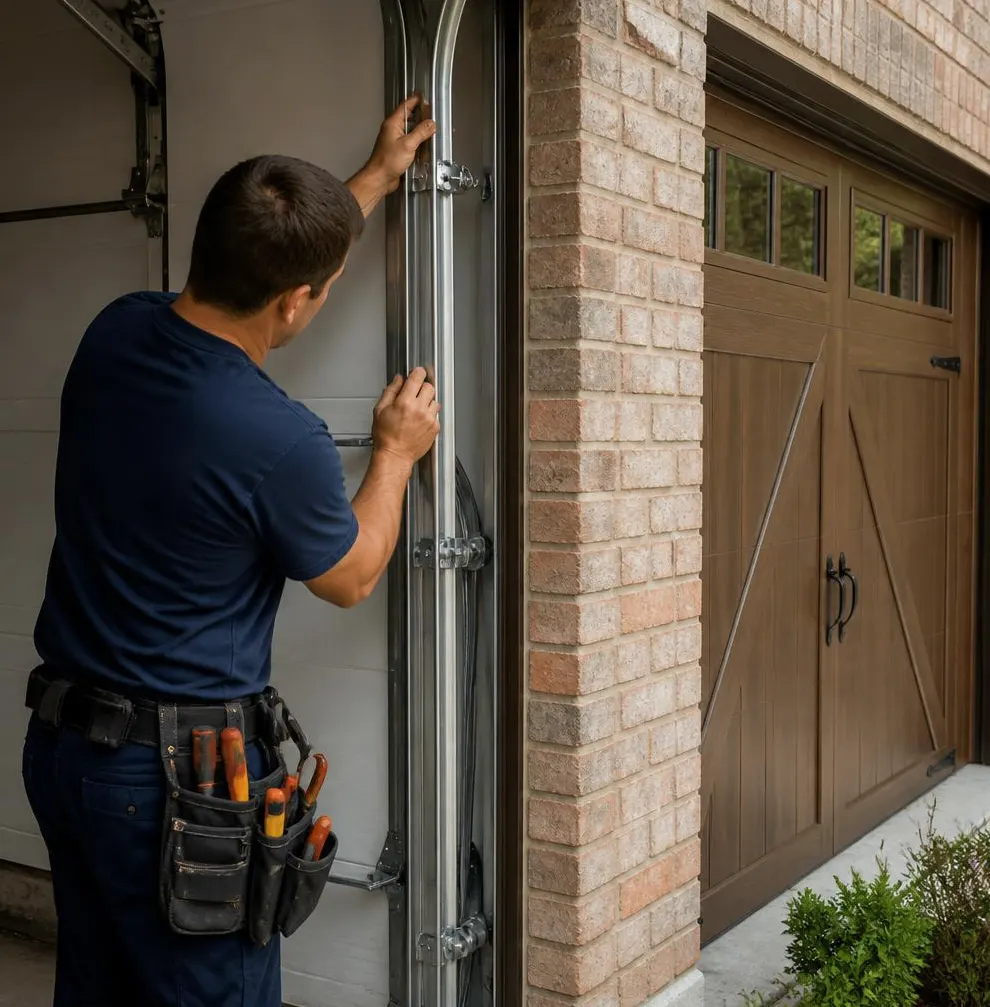
Walk the full length of both tracks and look for dents, rust, or spots where they've pulled away from the wall. Loose carriage bolts and worn rollers let the door wobble side to side, which gives wind something to work with. Tighten what's loose, and if a roller is cracked or a hinge is bent, replace it before cold weather makes the metal more brittle.
Panels and seams
Look for dents that have started to bow a panel, or seams where the sections no longer sit flush. Minor cosmetic dents aren't usually urgent, but anything that changes the shape of a panel weakens the door's ability to resist pressure evenly across its surface.
Weatherstripping and bottom seal
Run a hand along the bottom seal and side weatherstripping. If it's cracked, flattened, or pulling away from the frame, wind-driven rain and cold air get a direct path in. This matters more going into an Illinois winter than people expect: a gap at the bottom seal doesn't just let in a draft, it lets in meltwater and road salt spray that can accelerate rust on the bottom panel and track.
Opener and backup power
Storms in this part of Illinois often bring power outages along with the wind. If your opener doesn't have a battery backup, a sudden outage can leave the door stuck in whatever position it was in when the power cut out, open or closed. Confirm the manual release works smoothly in case you ever need to operate the door by hand.
Reinforcement worth considering
Horizontal struts bolted across the back of the panels add real resistance to wind load, and they're a reasonable upgrade if your door predates current wind-rated hardware or if you've had a panel flex visibly in past storms. Heavier-gauge steel doors also hold up better against both wind pressure and the dents that come from debris, hail, or an errant ladder. None of this needs to happen overnight, but if your door is older or has already shown signs of flexing, it's worth weighing the upgrade against the cost of repairing storm damage later.
Don't forget what winter adds to the mix
Wind is only part of the seasonal picture here. Once temperatures drop, springs lose some tension in the cold, metal contracts, and ice can form around the bottom seal overnight. A door that was marginal in October can get noticeably harder to open, or noisier, once the first hard freeze hits. Lubricating the rollers, hinges, and springs with a garage-door-specific lubricant before winter sets in keeps moving parts from binding when the temperature swings, which they do a lot in Kankakee County.
When to call St Anne Garage Door
If your door is out of balance, a spring has lost tension, or you've found track damage you're not comfortable adjusting yourself, that's the point to call in a technician rather than keep testing it. St Anne Garage Door handles spring replacement and preventive maintenance visits that cover exactly the checks above: balance, tracks, rollers, hardware, and seals, done before a storm exposes the weak spot instead of after. If the door has already taken damage from a recent windstorm, our emergency garage door service gets someone out to assess it and get the door secure again.
If you're in St Anne, Kankakee, Bourbonnais, Bradley, Momence, Aroma Park, Grant Park, or Manteno and want your garage door checked before the next wind event rolls through, call St Anne Garage Door to schedule a pre-winter inspection.